Nashville Notes

Haitian Colour

Nashville made me feel properly grateful for the freedom to travel, maybe for the first time. The day before I left, four of my Haitian colleagues were refused US visas for a work training trip.  I booked US flights on a whim and jumped on a plane. And I complain about restricted movement here.

I stayed in a motel that I would have turned my nose up at a year ago. I thought, ‘A bed and a shower with hot water coming out of it? That’s good enough for me’.

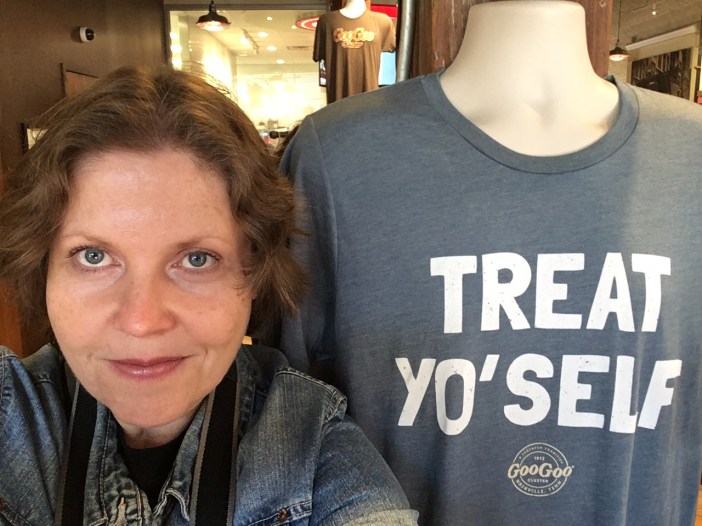
I was peppering to get to a shopping centre and then I was physically unable to shop like I used to. I looked at the overstocked shelves and rails and thought, ‘All tat. Obscene levels of tat. Tat that will end up in a rubbish mountain somewhere like Haiti. I bought St. Patrick’s Day tat with half a heart for old times’ sake. Haiti colours EVERYTHING now.

Germany’s Just Better

I got my hair cut at the Opry Mills Shopping Mall and had this conversation with the hairdresser:

Me: Do you like living in Nashville?

Her: No. Well, you asked … (shrug).

Me: What’s wrong with Nashville?

Her: I lived in Germany for eight years. Nashville’s not Germany.

Me: What’s so great about Germany?

Her: Oh, you know. The buses. The trains … (faraway look).

I first I felt baffled. Then I rejoiced. Because one service worker in America, one renegade redhead, has escaped the forced implantation of the US Chirpy Chip TM. She was probably in Germany when they came for her. They’re probably still looking now.

Cowboy Couture

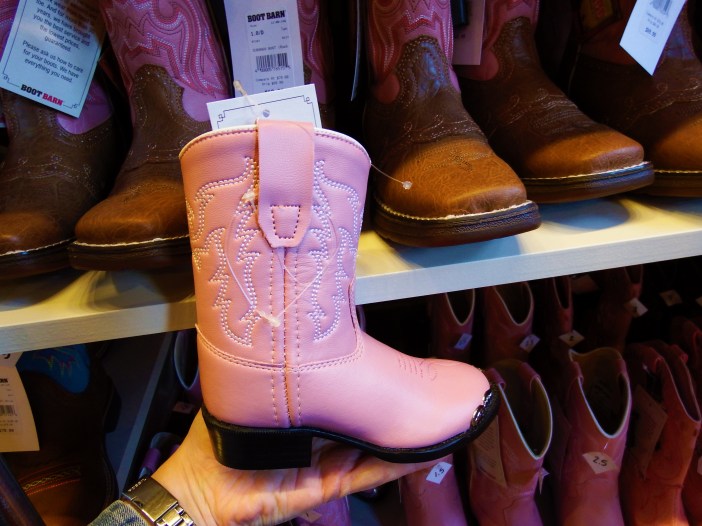
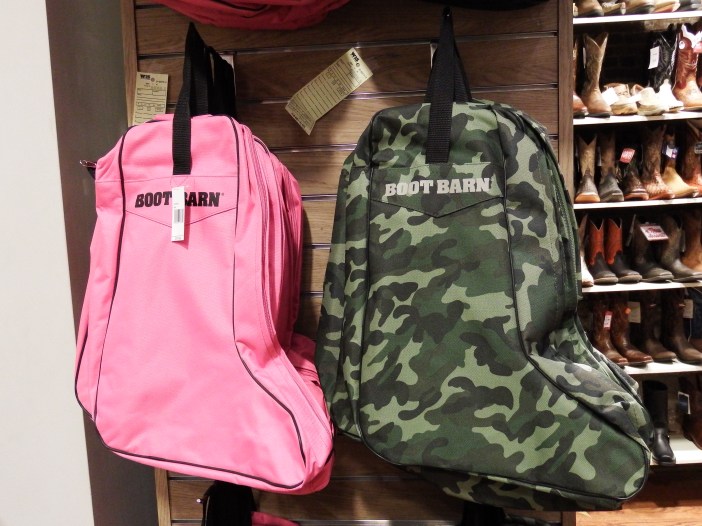
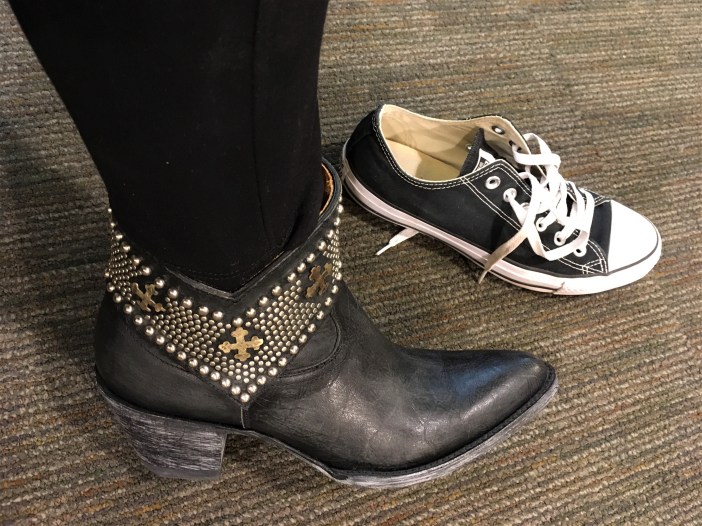
Big boots, baby boots and boot accessories. Wrangler work-wear for daytime and buckskin tassels at night. The fashion in Nashville will take you from the rodeo to the honky-tonk. If that’s a journey you wish to make.

Water Shows the Hidden Heart

An Egyptian taxi driver called Ibrahim told me that he loves Enya and blasted her greatest hits at me in the car. I felt floored by homesickness, what with the rain outside and the Enya inside. Ibrahim asked me what language Enya was singing in on track number nine. I listened carefully and said, ‘It’s probably Irish. I’m sure it’s Irish. Or is it Latin? Or fecking … Maori?’ I googled it and discovered it’s a language called Loxian. Made up by Enya. Ibrahim processed this and said, ‘That lady, she’s a genius’. I thought, ‘Scarlet for you Enya. What a load of auld shite’.

The Fear

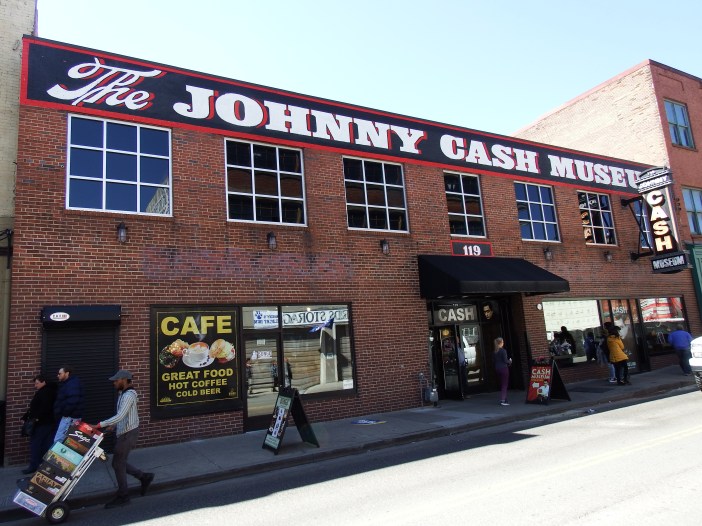
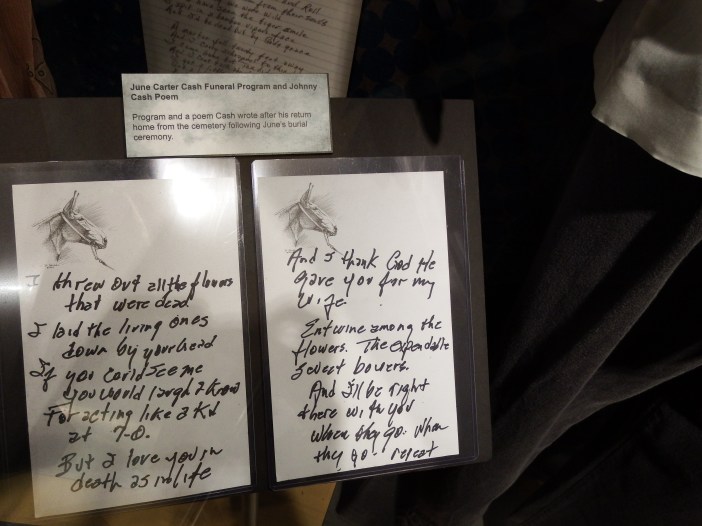
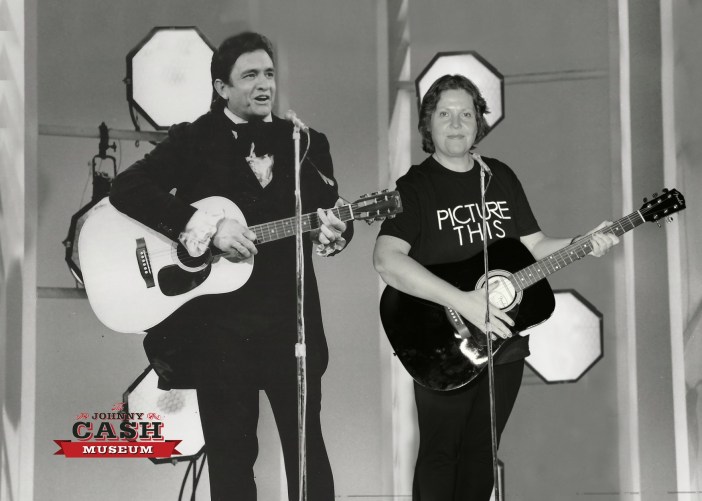
I watched the ‘Hurt’ video at the Johnny Cash museum and cried on account of how his hand shook in it. How could I not, standing there among the relics of a legendary life? The milky marbles he played with as a boy, the ‘Future Farmers of America’ membership card that he didn’t need for long, the stage outfits and size 13 boots looming out of low-lit cabinets, the absolutely KILLING note that he wrote to his wife June when he came home from her funeral. Johnny Cash was a mountain of a man in every sense of the word but old age, illness and death come to us all. When existential fear hits, I do what it takes to outrun it. Novelty photo shoot then? Any wonder? None at all.

Always, Yes and No

Feeling lonely everywhere I went because people kept asking, ‘Are you waiting for someone? Just you this evening? Do you need another menu?’ One lady tried to sell me Dead Sea Salt beauty products by asking skin-unrelated questions such as, ‘Are you married? Do you have children? All alone then …’ She needs to go straight back to sales school. I saw a sign in the airport that helped. God always moves to soothe me.

I don’t know about you …

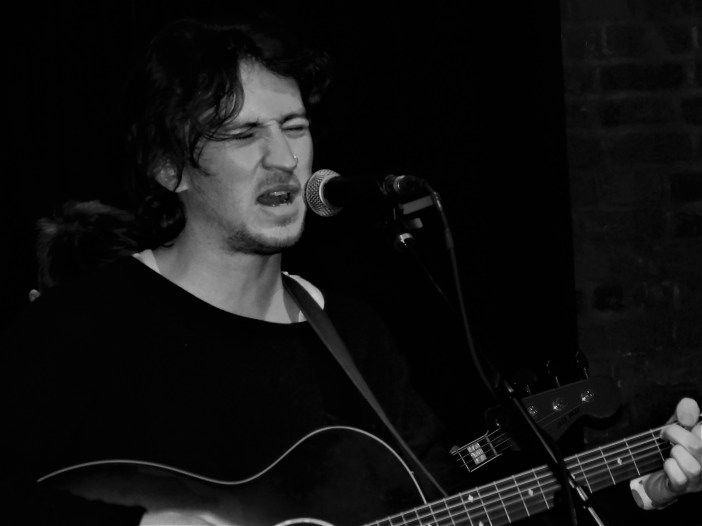
Watching two young lads from Athy take Music City by storm. Feeling sick thinking, ‘That’s it now. They’re on their way to stardom and there’s no turning back’. They say fame arrests your emotional development. If that’s true, then Picture This will be feeling 22 forever. I hope to Jesus they have some life skills; I hope they can drive and pay their own bills.

Connecting the dots like you wouldn’t believe.

When I was home at Christmas, I had wobbles about going back to Haiti. I had a conversation with God about it. I said, ‘If you want me to go back, give me one good reason to’. The next song on the radio was ‘Use Somebody’ by the Kings of Leon. I heard the lyrics ‘You know that I could use somebody. Someone like you and all you know and how you speak’. I felt comforted because all I want is to be useful; that more than anything.

I met the producer of the new Picture This album at their gig in Nashville. I said, ‘What’s your name again? Jacquir? That’s a very UNUSUAL name, if you don’t mind me saying’. I had the chats with him about the lads’ astonishing talent and said, ‘Yes, but will you make sure that they sound like THEMSELVES on the record though?’ Jacquir assured me that he would.

I drifted back to my budget accommodation and googled the producer’s credentials. I found out that he’s Jacquir King, who has won three Grammy awards and been nominated for over thirty. I felt mortified that I told a Grammy winner how to do his job. Then I noticed that one of his Grammys was for his work on ‘Use Somebody’ by the Kings of Leon. I never met a Grammy winner before. I probably never will again. Meeting that particular one felt like God doffing his hat at me. It felt like a God nod and a wink. I said you wouldn’t believe me. That doesn’t make it less true.

It All Begins with a Song

I visited the Grand Ole Opry and felt sad that my parents might never get to. We grew up on American country music.  I still know every word of country anthems like ‘Joshua’ by Dolly Parton and ‘Crystal Chandeliers’ by Charley Pride. I can’t advocate the ‘Joshua’ approach to hillbilly romance (orphan girl meets social outcast) but I can say this; if Irish people had listened to Charley Pride, the Celtic Tiger might never have happened. That song is a cautionary tale that I’ll never forget – ‘Will the timely crowd that has you laughing loud help you dry your tears? When the new wears off of your crystal chandeliers’. What we do when the new wears off defines us.

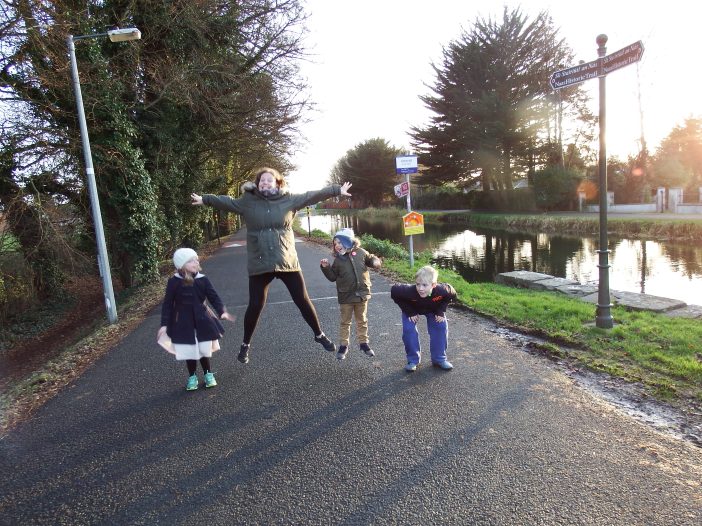
I stood centre stage at the Grand Ole Opry and wondered if any of the country legends who had performed there knew the colour they added to the lives of people like my parents, bringing up five bold babies in the homogenous, hermetically sealed, hangdog Ireland of the Seventies. Maybe not. I did my first novelty photo shoot of the trip for my Mammy and Daddy, who gave us an appreciation for songs that tell a story and leave you reeling when they end, thinking, ‘Jesus help us! What happened then?’
DSCF3120
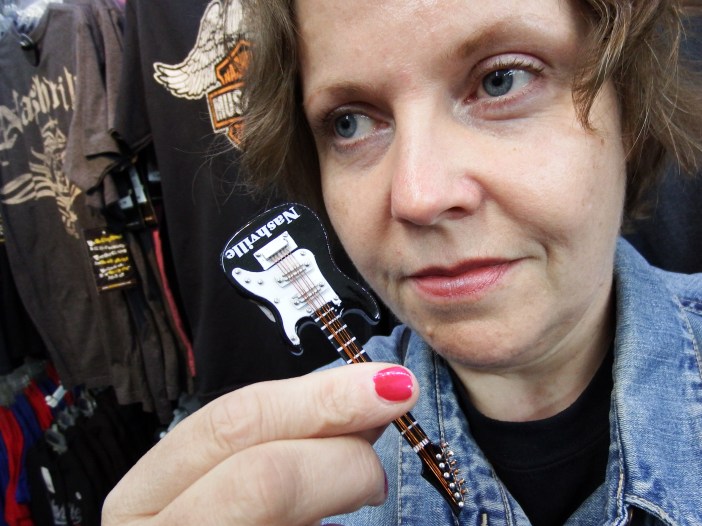
Nashville tat.
IMG_1086
Considering a change of style. Deciding agin it on account of the $400 price tag. And the fact that I’m not a cowgirl. That too.
DSCF3199
Big boots.
DSCF3207
Baby boots.
DSCF3201
Boot accessories.
DSCF3218
I’m no business graduate but this commercial model will never work. (I am … I am a business graduate).
DSCF3103
Outside the Johnny Cash Museum.
DSCF3099
Inside in it. 
DSCF3044.JPG
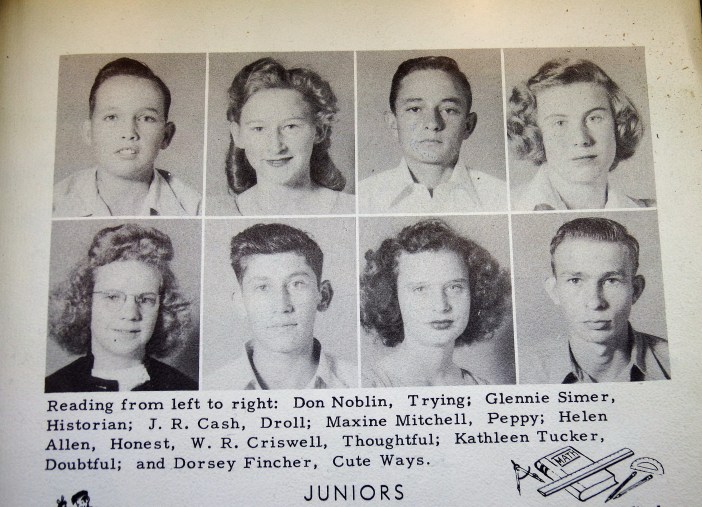
Johnny Cash’s high school yearbook. I like the look of Dorsey with the cute ways. I’d hate to be Kathleen with the doubtful nature. 
DSCF3058.JPG
The KILLING note.
IMG_1176.JPG
On the run from existential angst. Again. 
IMG_1196
Airport consolation.
DSCF3014 (3)
The astonishing talent.
DSCF3029
Billboard outside the Picture This venue. A sign within a sign 🙂
IMG_1113.JPG
The first novelty photo shoot giving me quite the taste for it. 
IMG_1023.JPG
Laughing at this sign backstage at the Grand Ole Opry. Anyone? Sigh …
IMG_1173
Believe me, I did.
DSCF3215.JPG
So many ways to do what you’re told.
DSCF3139.JPG
Goodnight Tennessee. And from Nashville, over and out.

IMG_1049.JPG

The Year of No Fear

Last year was my year of no fear. At the start of the year, I was living and working in my home town, making a life for myself in the five square miles between work, my parents’ house and my own. By the end of the year, I was living and working in a developing country, 4,000 miles and many light years from home.

How I got from there to here is a mystery to me, genuinely. All I know is that I christened 2016 my year of no fear openly, publicly and then I had to follow through.  I asked myself, ‘What would I do if I felt no fear?’ and then I tried to do that thing. Most of the time. A one-degree turn every day brings a full revolution in a year.

All the tiny turns involved saying, ‘Yes’. ‘Yes’ to change and growth and scaring the shite out of myself in the name of both. ‘Yes’ to finding out who I am alone and in community, with all the planks of a little life removed, like loved ones and language (they were my favourite planks). ‘Yes’ to Jesus on the sea, beckoning me.

Please don’t stop reading just because I brought Jesus into it. It’s really Peter who inspired me. Peter walking on waves, like no man should. Jesus stands on the sea in front of him and says, ‘Take heart, it is I; have no fear’. What would you do? Peter walks on water too. His fierce love and loyalty carry him across the waves until he becomes afraid and starts to sink. Jesus saves him and says, ‘Why did you doubt?’

That friendship tears the heart out of me. There’s Peter, all rash and passionate, making extravagant promises he can’t keep. There’s Jesus, loving him anyway, tenderly, through chaos and heart-scalding hurt. Poor Peter is torn between terror and triumph permanently, for all of history but, good God, the glory of that moment. The mind-bending, universe-upending glory of that moment, advancing towards a face you love, all lit up with delight. It must have been a half-blinding sight.

Triumph for me is only ever about doing God’s will. If I wanted to try for Peter-style triumph, I would have to leave my boat. I would have to lock eyes with Jesus and hold that steady gaze. My boat is security and it always has been. I left it and took one watery, wobbly step at a time.

And these are some of the blessings that the boat-leaving brought; I did my first job interview in fifteen years, got the job, took the job, applied for a career break, moved to Haiti, started to learn a new language and survived a hurricane. I spoke in front of 14,000 people at an Irish Cancer Society event, was involved in raising €14,000 for charity, wrote an honest article about depression, had it published, met my favourite band and started a blog. I also became a landlady and lost weight (not unconnected).

It was the best year of my life but I can’t claim credit for it; the whole chain of events was fuelled by the goodwill of others and electrifying grace. But the whole chain of events started with my foot in the water and I can claim credit for that. I’m proud of my year-younger self for that much at least. That much at last.

So, there I was at the end of 2016, admiring my foot in the water and singing, ‘Ripples in the Rockpools’ to myself (a bit random but I’m trying to continue with the nautical theme). Then it all came crashing down. I was homesick and heartsick and suddenly appalled by what I had accidentally, incrementally committed myself to. Haiti? For eighteen months? I was saucer-eyed at my own folly. Like Peter, I took fright and sank. I spent Christmas back in my boat.

Travelling back to Ireland, being welcomed like a lost sheep, it strengthened me. Nobody judged me, nobody probed; there was only kindness from every quarter. My friends asked about my work and the people I work with and I cried trying to express the goodness of both. My nine-year-old nephew invited me to his school to collect money that he and his friends had raised for Haiti; €470 for children in a country that is only real to them because Conor Clarke’s aunty lives there. I must be long-sighted because I only see clearly from afar.

I started to look forward to going back. I opened my diary to check the details of my return flight and saw ‘Flying Home’ written beside the departure date. If the words hadn’t been in my own handwriting, I wouldn’t have believed I put them there. Flying home? Flying home!

My journey back was totally serene. I landed in Port-au-Prince to music and mayhem; a Caribbean brass band and shouty fights about who skipped the queue. I stepped into the sunshine and felt it, the knowledge that had walked with me through four airports; ‘Take heart, it is I; have no fear’. I jumped into the jeep that was sent to collect me and smiled as it pulled out. I thought, ‘Why did you doubt, Tracy? Why did you doubt?’

2016-12-26-16-25-15
Back in the boat for Christmas.
fullsizerender
Flying home for the new year.

A Seat on my Bus

Last week, I was feeling like one of the Scissor Sisters locked up in the Joy. I spend fifteen hours a day in our little house in Petion-Ville and twenty-four hours a day some weekends. I leave for work at 6 a.m. and return at 3 p.m. to lockdown and lights out. I travel through the city on a minibus like someone on safari; observing an urban habitat from a safe distance but never entering it because I’m prey. Or so they say.

I’m sad that I can’t have one authentic interaction with a person on the street because, Jesus, that’s why I came here. If I can’t be a real citizen of this city, I might as well dial my office work in from home. I’m frustrated that I can’t take photos either because Port-au-Prince is visually spectacular. Every street corner is a living picture filled to the frame with desperation and a strange kind of romance. The heat and the colours are scorching.

I was hurtling home one afternoon thinking, ‘I really want to share this view’. I’m starting to enjoy this city, you see. It’s growing on me and I don’t know how it happened. One day I thought, ‘Nothing is regulated here. I really question that’. The next day I thought, ‘Nothing is regulated here. I half admire that’. I think the public servant in me passed away peacefully one night in Petion-Ville. She must be location-specific.

So, I was sulking about not being able to take photos on the street because a picture paints a thousand words. Then I thought, ‘Maybe a thousand words could paint a picture’. I’d like to show you what I see through the window of a very bockety bus. Will you jump on that bus with me? If it had seat belts, I’d tell you to buckle up.

The first thing you’ll see is dust; clouds of it rising from the rubble and the road to buffet your bleary bed head. The windows of the bus are always open because of the heat, so I swallow good-sized swirls of dust whole. The dust hurts my eyes and coats my teeth. Sometimes it smells toxic too, like something is burning that should never have been set alight – rubbish, giant truck tyres, animal carcasses maybe. My lungs don’t like the dust or the smell; I cough like a consumptive when I arrive at work. Someday, a medical professional will examine my chest x-rays and say, ‘Nobody told me she worked on building sites. In the nineteen-fifties’.

When the dust settles, you’ll see what I mean about the lack of regulation here. In this city, you build what you like where you like, you don’t worry about water standards or refuse disposal, you set up your own business with a plastic chair and a Digicel sun umbrella, you make and sell food with no knowledge of or regard for hygiene, you pay no taxes, you stand or squat in the street to pee, you drive like a maniac in a vehicle that will never see an NCT, permits and licences do not enter your vocabulary. You do these things because you’re living in extreme poverty so you don’t have an ounce of spare energy for red tape or pretension.

You don’t have a spare gourde to spend either. A complete lack of disposable income is whispered by the seldom seen things; sunglasses, cigarettes, motorbike helmets, spoiled pets. Their absence is a more reliable economic indicator than any exchange rate. In Port-au-Prince, the most pressing thought in the collective consciousness is getting through the day. That push is palpable, even through the window of a small vehicle that’s just passing through. I’m not celebrating that struggle but it’s the most honest place I’ve ever lived. What you see is what you get and you see absolutely everything.

Given the poverty and the lack of social welfare, I expected the people here to look ragged. Tattered clothes are not what I see on these streets. I see people making the most of what they have, which is mostly imported, second-hand clothes.

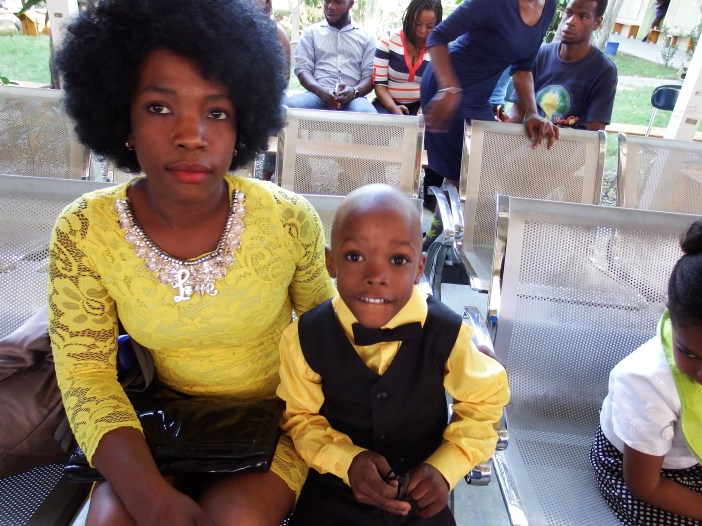
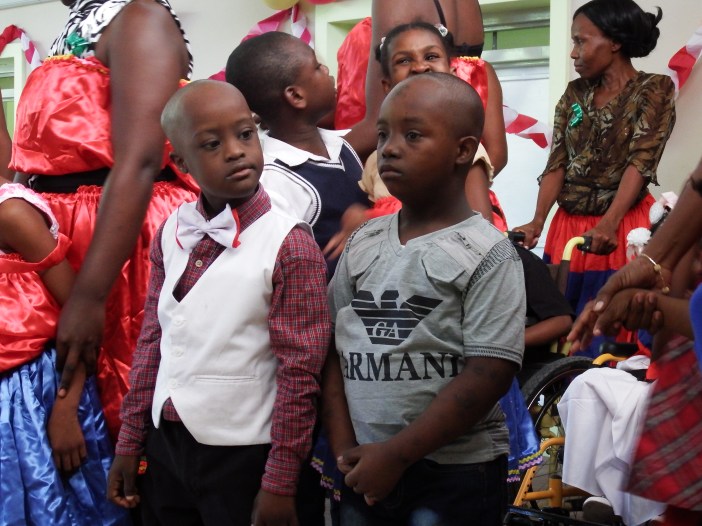
Haitians have great natural style but it’s random by necessity. Men wear Christmas jumpers in October and slogan t-shirts all year. They say things like Speed Bitch, I’d Rather be Farming, Here’s the Beef and Being Lucky Rocks! Women wear glittering sequins all the live-long day. Children skip around in Communion dresses. It’s like a charity shop and a TK Maxx exploded and there was a communal scrum for the combined contents. But, if you look closely, the people of Port-au-Prince are very aware of what they wear; their colours are perfectly co-ordinated, their accessories are chosen with care. I’d love to capture this street style and celebrate it online; it’s more inventive than anything I’ve seen elsewhere.

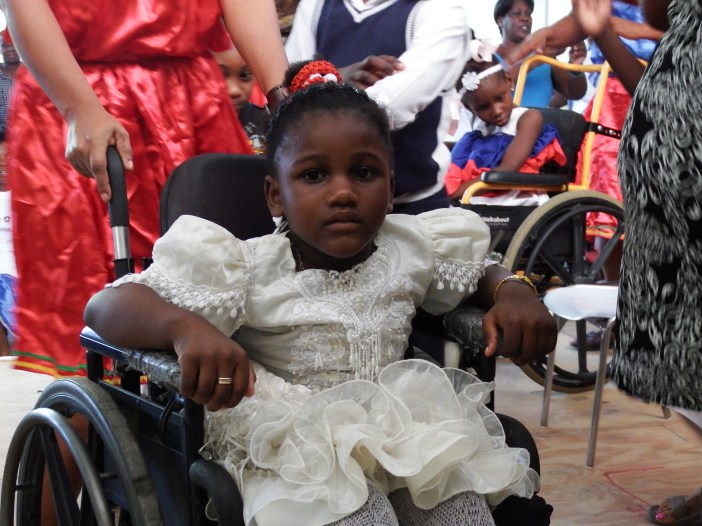
And the children. Jesus, the children. Haitians must use more yards of ribbon per head of population than any other nation. Literally; every little girl’s hair is extravagantly bedecked. Many families can’t afford to send their children to primary school; those who can go to great lengths to turn their children out well. They waltz them there and pirouette them back, in ribbons and lacy ankle socks. The lucky ones get an ice-cream on the way home.

Small secondary schools are manifold so the uniforms are too; I count twenty-four different varieties on my morning commute. The colours are like a squirt of fresh lemon juice to the eyeball; they’re citrussy, they’re blinding, they’re outrageous, they’re bold. There would be uproar if my teenage nephews had to wear tangerine trousers and peach shirts to secondary school. They’d drop out and my sister would be on the run from social services on account of their truancy. Haitian boys add a fake Hermès belt and swagger around like they just invented orange.

We’ll arrive at the Kay Ste. Germaine school for special needs children carrying some of the things that we minded on the way; water samples that could contain cholera, cardboard boxes that definitely contain cats. No cargo could surprise me now. I’ve seen squalor on my way to work and I’ve thought about my own unearned privilege in the face of it. I’ve met people’s eyes and I’ve smiled at them to say, ‘I’m here to help. I hope you know I’m here to help’. Maybe that’s an authentic interaction after all. Maybe I’m just fooling myself. Either way, it’s all I have for now. Difficult journeys have insight in them. I thank God for mine.

1
Haitian style at a school party at Kay Ste. Germaine. Sunny sartorials 🙂
2
More Haitian style at the same party. These two boys were by far the best dancers there too.
3
This little lady’s flounces put me to shame in my own flounce-free frock.
4
Brand new shoes for the big party. The maternal pride buckles me a little bit.

Singing is my Signal Booster

The week after my conversation with Annabelle was a good one. I felt settled in my new digs at Tabarre and I was making progress at work, preparing an application for emergency hurricane relief. If it’s approved, 30 families will get money to buy food for their children and reassemble their homes. That felt like a good enough reason to be in Haiti that week.

I was in my stride, I was quoting Ban Ki-moon, it was all coming together! I was elated, Gena was frustrated. I knew why; you can create all the pretty statistics you like but you can’t tabulate human suffering. I looked at her and said, ‘This is a marriage made in heaven! You hate all this stuff. I live and breathe it’. Twenty years of local government training were coming into their own. Red tape? I have a black belt in it.

On Wednesday, I had this conversation with my friend Kim on Viber and I didn’t absolutely lose it, like I would have on day one. I just got on with it and accepted the things I cannot change, like the climate, the ecosystem and native gecko behaviour.

Me:        I just saw a little lizard in my room but now I can’t find him. My housemate says he’s not aggressive … yay.

Kim:       How little are we talking?

Me:        Small but swift.

Kim:       Apparently, they keep insects in check and are harmless, unlike mosquitoes (just googled).

Me:        That’s grand but I don’t want to wake up with a lizard on my face.

Kim:       Googles if lizards like faces …

Me:        Is afraid to google lizards and faces …

Buoyed up by feeling useful and reconciling myself to reptiles, I agreed to go to Kenscoff for the weekend. Kenscoff is the NPH residential home high in the mountains above Port-au-Prince. It houses over 300 children, some of whom are orphans, some of whom are abandoned, many of whom have special needs. Third move in two weeks, you say? Why, certainly! In fact, my bag is already packed. I live out of a suitcase now, you see! Cheerfully!

The Friday-evening drive took two hours on dusty roads and through crowded markets, where people sold crumpled clothes, fat-backed tellies and second-hand blenders. Every consumer item ever created in the first world must end its short life cycle here. There was rubbish and rubble everywhere; mountains of refuse, rivers of rocks.

The mini-bus driver bought twelve dozen eggs and handed them to me to mind. I balanced them on my knees and was afraid all the way that they would scramble in the heat or crack from their Haitian massage. That’s a euphemism for having the shite shaken out of you on roads that are more pothole than any other discernible thing.

Kenscoff’s setting is stunning; the mountains and tall trees make it look like the Swiss Alps. There were challenges of course; what would a new day in Haiti be without them? The drinking water was not safe, the rainwater had to be collected to flush the toilet and there was no Internet connection. I went to bed on Friday night thinking, ‘I can do this. If I can live with a lizard, I can do this’.

On Saturday morning, I walked the grounds with some of the children, who proudly pointed out their own individual houses and every facility on site; a school, a library, a bakery, a clinic, a little hut where boys go to get their hair cut. Then they taught me the Creole word for every animal under the sun at a mural of Noah’s Ark. And everywhere I went, big eyes stared at me like I was one of the exotic animals in that mural and little hands made their way into mine. On Saturday afternoon, I read a whole book in one sitting thinking, ‘This is amazing. I never read any more’.

On Sunday morning, my new beginning tripped and fell.  I had a very sick stomach, probably from the water, even though we boiled everything we drank. That’s another euphemism and it means the same thing as the first one. I was upset about the water and the sickness and the Internet and I wanted to go straight back to Tabarre. But Monday was a national holiday, so we wouldn’t be leaving any time soon. The rage was in me, this time with God.

I came to Haiti because of my faith. I felt drawn here in a way that I couldn’t explain or resist. But since I arrived, my conviction has wavered and the connection to God has collapsed, like the power lines that Hurricane Matthew flattened. It was like a Viber call that had gone from ‘excellent signal’ to ‘poor signal’ all of a sudden and for no obvious reason. Only there would be no Viber calls for the next few days, would there now, God? Only physical discomfort and social isolation and spiritual torment. It’s a good job God is used to me. Somewhere over Kenscoff, he may have rolled his eyes.

I went to Mass to distract myself and there, for the first time in two weeks, a brief, flickering signal was restored. The children had gone all out for the occasion; there were party dresses and smart shirts, there were dangly earrings and colourful beads. In my casual t-shirt and jeans, I was scarlet for myself. And they sang the sweetest songs and I nearly cried because I saw a young girl, who is non-verbal, who can’t make words with her mouth, add her voice to the chorus, her face all lit up with passion and pride. Start where you are, use what you have, do what you can – I use that motto all the time but I never saw it put into practice so movingly in front of me. I made a little video to remember the singing by; I watched myself mouth the word ‘happy’ in it because, in that instant, I truly was.

So, another week of highs and lows, all myriad and magnified. I don’t know if one is enough to sustain the other just yet but the fact is, I’m still here. I’m still here with the honest intention of learning some church music, so that maybe I won’t miss my gospel choir at home so much. I’m still here with the honest intention of getting through another week. And this week’s honest intention is better than last week’s wobbly hope.

When the Thing You Resist is the Thing You Really Need

It’s nearly two weeks since I left Petion-Ville. I resisted the move, even after hearing gunshots at the gate, because I’m the kind of human being who clings to what she knows.

I had just learned how things worked in Petion-Ville; how to find the key that I needed in the warden’s bunch that I carried, how to change the water dispenser and how to activate the electric pump when the water tanks are empty. I’m not good at maintenance matters at home and I’m even worse at them here. I was determined to learn but my eagerness made me clumsy; I tripped over or spilled everything I approached.

So, I had finally mastered a few basic tasks, giving me some degree of control over my own environment, or so I imagined. Then word came that I would be moving to Tabarre, the school and rehabilitation centre where I work. The move was for my own safety while my housemate was away but I wasn’t one bit happy. I felt like a witness protection scheme criminal moving between safe houses.

I sent a WhatsApp to my boss Gena saying, ‘I know you’re juggling and things change quickly, but I find all of this unsettling’. She replied, ‘That’s how it is here. We have to let go of our need to always know what will happen next’. That’s Mayo for, ‘Get on with it now, Lily White’.

The first night I shared a room with two Haitian girls who grew up in the orphanage that Gena runs. My face fell when I realised that I wouldn’t have a room of my own, like I did in Petion-Ville. I lived alone before I came to Haiti, apart from a short stay with my parents before I left. I really value my privacy. But privacy isn’t an option here. Here, you say, ‘Hello. Nice to meet you’ to someone new. Then you move in with them and hang your knickers on their line to dry.

The girls were friendly and we communicated through gestures. They pointed to the air-conditioning unit and seemed to ask if I wanted it left on overnight. I nodded. At 3 a.m. I had to climb out of bed, put on extra layers and use my towel as a blanket because it was bitterly cold. The girl next to me wore a woolly hat as she slept. I went back to bed bewildered.

I woke up the next morning to see the same girl remove her hat discreetly under her blanket. It occurred to me that she might have set the temperature lower than usual for me, for my comfort. Now she was trying not to offend me with her discomfort. The night before, after lights out and before the polar winds, I heard her chatting to herself. I only realised she was praying when I heard her say mèsi, mèsi – thank you, thank you.

By Sunday night, Lily White was contrite. Tabarre had transformed me and it was hard to say how. Maybe it was finally feeling physically safe. The low-level terror was gone and my brain cells and emotions rejoiced at their sudden liberation. ‘We’re back!’, they said. ‘We’re free to process other inputs now, like that Caribbean sunset you’re watching in a rocking chair on a porch. Look at those colours, all light and dark and swirly, like someone splashed pink lemonade on a bad bruise. We didn’t even notice that when you only fed us fear’.

Maybe it was the beautiful, candlelit Mass that I had just attended in the grounds of St. Damien Hospital. Fr. Rick Frechette is the priest here, a Passionist from the US. He’s also a medical doctor and national director of the charity I work for. When things get really difficult here, really violent and desperate, he stays and says, ‘What kind of shepherd would leave when the wolf comes?’ He said Mass that evening and even though I didn’t understand one word of his long Creole sermon, even though I sweated through it in complete linguistic oblivion, I still felt the better of it.

Maybe it was the news coming through of Hurricane Matthew’s devastating impact in the parts of Haiti that I couldn’t see but that are still in my new neighbourhood. 1,000 deaths and US $1 billion dollars of damage at the last reckoning. When I read that, when I started to comprehend the magnitude of the catastrophe here, I felt ashamed of thinking and writing the words ‘poor me’ on the eve of it. I wanted to edit those words out of my first blog post immediately but I let them stand as a lesson to myself. They’re my first milestone on the path to proper solidarity.

Maybe it was the conversation I had with Annabelle, the praying girl. In her hesitant English she told me that she didn’t know her own parents, that she had grown up in Gena’s orphanage and considered her to be her mother. She said that she didn’t miss her parents but that sometimes, when she saw a mother and child together, she felt sad. She joined her arms and made a cradling motion when she said that and I felt overwhelmed by compassion for the child she once was. Her smile is radiant and she’s always smiling. When I tell her that, she says, ‘It’s because I have a happy heart’.

Whatever the reason, I went to bed on Sunday night with a whole new attitude. ‘Don’t be the person who complains about mosquito bites when people have lost their homes’, I told myself. ‘Don’t be the person who sends uppity messages to her boss when she’s nursing a sick child in hospital and dealing with the aftermath of a hurricane. Be the girl who has no parents and very few possessions but who still shares her small space with good grace and goes to sleep whispering, ‘thank you’. Be that serene soul for a week. If you can’.

fullsizerender10
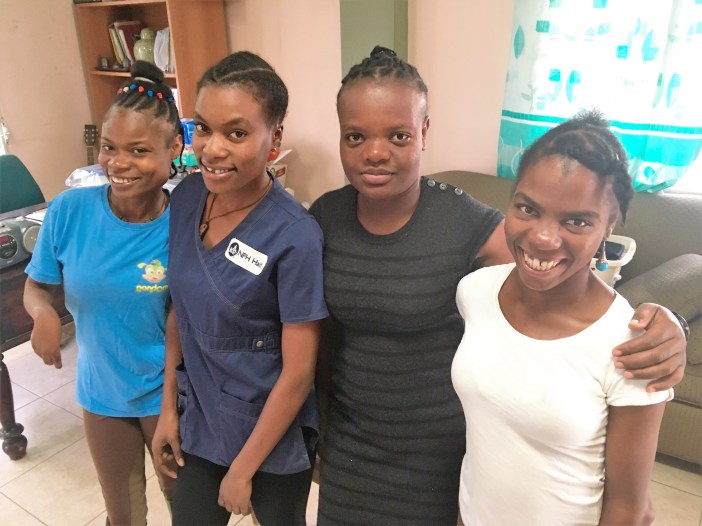
These girls have been so kind to me.
fullsizerender12
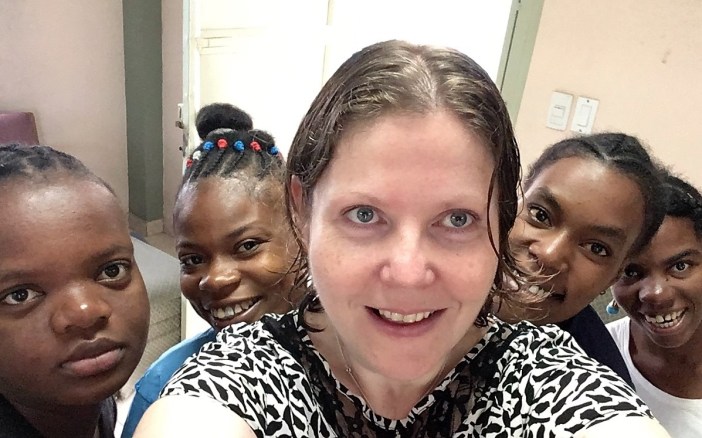
The Creole for smile is souri. Souri also means mouse. A mouse eats cheese. That’s what you say when you want someone to smile. I’m getting cute about learning new words. Please ignore my wet head.


The Day That Started Badly But Ended Well

Hurricane Matthew took his sweet time to hit Haiti, twisting and turning, strengthening and slackening. First he’s a force five kind of fellow, then he’s more like a four. First his terrible temper explodes, then his random rage subsides. First he’s travelling alone, then he has female company. He picks up Tropical Storm Nicole and they carouse through the Caribbean on a riotous first date.

My hurricane education was quick and immersive. I could give anyone a run for their money on the Saffir-Simpson wind scale now. The forecasts for Haiti were dreadful; a direct hit, biblical rains, 140-mph winds, infrastructural damage and massive loss of life. In the end and in our safe suburb, Hurricane Matthew was all talk. There were heavy rains and strong winds but nothing worse than I’ve experienced at home. This was not the case in parts of the north and south; Matthew was merciless there.

So, I learned more than I ever wanted to know about the weather and I also learned who I am in a hurricane; frightened and singing my own song to soothe myself in the form of my very first blog post. After five days on lockdown, I went back to work on Thursday feeling totally triumphant. I survived a hurricane! My friends and family helped me to survive a hurricane!

But a terrible thing happened on Thursday night. When I first arrived, my boss Gena from Mayo warned me that I would hear gunshot in the streets occasionally. She said, “Sometimes ripe mangoes drop from the trees and it sounds like gunshot. Don’t confuse the two”. I asked, “Why are there gunshots? Do people just discharge their firearms?” I was thinking of celebratory gunfire at Indian weddings. Oh, the innocence. Oh, the fresh-off-the-plane, long-gone innocence.

I go to bed early here, usually around 8 pm. I was lying in bed making a mental list of all the things I had to do the next morning. My housemate was going overseas and I had to move to another location because I’m not allowed to stay on my own without the means to communicate in an emergency; another reason to fast forward the Creole lessons. I was thinking, ‘Clear the fridge, remove the rubbish, take your clothes off the washing line, don’t forget your medication’ when I heard a woman shouting outside. I may not speak Creole but distress leaps language barriers. She repeated the same word over and over; it sounded like army! army! Two gunshots. Silence.

The dogs started to howl. I went to the window where I could smell gunpowder. Whatever had just unfolded, happened very close by. Surely the police would come now and an ambulance for anyone who was injured. Sirens sound all day long here but not when you need them. No vehicles arrived. I felt sick.

There was a locked gate and an armed security guard between me and the possible scene of a crime but my first concern was for my own safety. I’m ashamed of that and it added to the trauma of the experience later. I thought about going out to investigate but I can’t even express how ungoverned this city is, how cheap life is here. There’s no gun regulation, no police presence that I’ve seen; you can get shot for taking a wrong turn in traffic. So I lay in bed, grasping at straws, thinking, ‘Maybe I misinterpreted the situation. Maybe the lady was just drunk and the shots were fired by hooligans’. I couldn’t convince myself so I picked up my Creole dictionary and switched on the light.

There was ame, meaning armed. That could have been it; a shouted warning about an approaching gunman. Then I opened the page that I already knew contained the answer; anmwe, meaning help. Jesus Christ. Somebody screamed for help and nobody came to her aid. And I was one of the faceless, pitiless nobodies.

It was the last straw. The very last straw in an ever-expanding bale. The last time I cursed on the internet, I regretted it straight away and apologised afterwards. Not this time. I thought, ‘This fucking godforsaken country with its hurricanes and mosquitoes and hot sun and cold showers and casual shootings and complete ANARCHY. I fucking hate it and I’m not safe and I’m going home’.

I cried all morning after a very bad night’s sleep. I cried when I woke up and I cried in the shower. I cried behind our huge metal gate as I waited for the bus and messaged my sisters. I tried to be understated but sisters know the international code for SOS; it’s ‘I don’t want to worry you, but …’ I cried on the bus and I cried in my office. I wondered if I could get a transfer to NPH in the Dominican Republic, just across the border. Maybe people didn’t shoot each other in the streets there. Asking me to work that day was like saying, ‘Just step into this giant kiln and do a whole new job there now. In a language you don’t know. After a shooting’.

Then a WhatsApp from Gena, ‘Will come find you in a while. So sorry this is your intro to Haiti. Things will get better. I promise’. More tears and some snots. Gena came to find me and walked me to St. Damien Hospital, just a short distance away. It’s the only free paediatric hospital in the country. They’re bracing themselves for an outbreak of cholera there now; Matthew’s poisonous parting gift.

Gena’s been here for more than twenty years and everyone knows her. I felt like I was trailing a roaming bishop as people stopped to chat, share hurricane stories and get advice on the pressing issues of the day. She took me to visit a sick girl from her orphanage and discussed taking an abandoned child back home with her; some children spend months in the hospital, unclaimed. She had a laugh with every child we met. It was my first real reminder of why I’m here.

We returned to the office and outside, on a piece of playground equipment, we had a heart to heart. Gena said, ‘This right here, this is the shittiness. The first month is awful for everyone’. She promised to ask a local girl to help me with my language studies. She called a driver to bring me to the shop, where I spent €13 on the strongest mosquito repellent I could find, one for forests and swamps. It’s going to be an expensive habit but I’d spend my whole stipend to keep them at bay. The day ended with ice-cream and dulche de leche at a communal table with Spanish, English and Creole flying. In post-hurricane Haiti that felt like an outrageous treat.

So, I have no idea what actually happened on the street that night but please pray for all the anonymous souls in this city, living tough and sometimes brutal lives. I hope I just fashioned something from nothing here. I wish I never learned the Creole word for help.

I repeat two of the other words I’ve learned to myself, over and over. Ou kapab! You can do it! One week of the shittiness has been endured and I just might survive another. Today I can’t promise anyone here or back home a single other thing.

The Tomato is Red

It’s 2 pm on a Monday afternoon. I’m in a small bedroom in a rundown house in a lawless city in a broken country. I don’t know why I’m here.

I’ve been in Port-au-Prince since Thursday night when I arrived on the last flight from Atlanta. Gena from Ireland and Norma from Argentina came to collect me from the airport. Annette from Sweden took charge of me when I arrived. I was shocked that first night. Shocked at the accommodation – such a basic bedroom, such a fortress feel, with an armed guard at the entrance and keys to every door and gate, keys that I can never let out of my sight or give to anyone for fear that they’ll rob me in the night. Or worse.

I fell into my little room with two overstuffed suitcases, all stunned and stumbling. I couldn’t make the light work and I didn’t want to disturb anyone so I went to bed in the dark, distressed because I couldn’t see to unpack or put up the mosquito net that I had gone to such great lengths to procure.

I was excited getting up on Friday, despite the 4.30 am start, despite the lack of hot water to shower in. I was looking forward to seeing where I’d be working and meeting the people I’d be working with. The driver came to collect us and we mini-bus-meandered through the city, climbing at times and stopping off to collect various, random staff members; the butcher, the baker, the candlestick- maker, or so it seemed. The city was alive at that early hour; colourful, loud, dusty. I was drinking it in, delighted to be in such an exotic environment, thinking about the photos I’d take of all the sights with my new camera, like the queues of elegantly-attired locals waiting for visas at the American Embassy; such surprising sunrise style.

We arrived at Tabarre, the NPH centre where I’ll be based; more guards, more gates. We went straight to morning Mass at the neighbouring hospital. I was warned to expect corpses in body bags laid out on the floor. There were none that day; no patients had passed away. It was a beautiful service. I was welcomed by the friendly Mexican priest Hugo, the singing was soothing and I left feeling happy and serene.

My working day is 7 am to 2 pm. There was a bad start. About 80 special needs children attend the school at Tabarre. I know some of their faces from the NPH page on Facebook. Their smiles are the reason that I left one life behind and flew 4,000 miles to start another. At first they were all kisses and hugs and shouts of ‘nouvo’ and ‘blan’ which was fair enough; I am new and very white too. Then one child sank his teeth into my arm and I froze. Haitians speak Creole. I have a few words but not the one I needed in that precise moment; stop!

I tried not to panic. There was no broken skin so I cleaned my arm and retreated to my cool, air-conditioned office to read some files on my desk. One of them mentioned the prevalence of HIV among NPH beneficiaries. I stopped pretending I wasn’t panicking. I texted all the work colleagues whose numbers I had to express my panic as politely as possible. They reassured me but I wasn’t convinced. ‘Tis a rough welcome’, Gena replied and that summed it up. It was just one little boy’s exuberance but I felt rejected, assaulted and woefully out of my depth.

I stood to observe a school lesson and learned my first Creole phrase; tomat la se wouj – the tomato is red. Tomato talk won’t get me too far in a crisis but it’s a start. I joined the other volunteers for lunch and there was goat stew on the menu. I couldn’t do it. Goat is something I’ll have to build up to, not a day-one-delicacy. I was insulting the cook and my hosts. It felt like another tiny failure on my part and they were starting to accumulate.

Then it was home to a weekend of lockdown and hurricane talk. There is a great feeling of unrest on the streets of Port-au-Prince at the moment. Elections are coming next weekend. In the meantime, there is no government, no proper state machinery, no stability. Crime is at a high because poverty and hunger are also peaking. Most Haitians survive on less than $2 a day. I spent ten times that on a quick food shop that filled a small basket.

So we can’t stir outside the curtilage of this house. There are about fifty steps between my bedroom door and the front gate. That’s my radius of activity for now because Hurricane Matthew is coming, so there’ll be no work for a few days. Matthew’s slow-moving centre is expected to hit Haiti tonight. Poor Haiti – as if it hasn’t suffered enough. Poor me too – clearing the yard of all potentially air-borne missiles on day three of my big adventure. Plant pots, rat traps; they’re all under cover now.

If any or all of this seems self-pitying, I apologise. I’m lucky in lots of ways. Unlike many of my 2.6 million new neighbours in this sprawling city, I have secure accommodation, a reliable food supply and enough money to get by. My work colleagues have been gracious and helpful and every Haitian I’ve met has been beautiful, curious, courteous and kind. I thought twice about sharing any of this because I don’t want to seem ungrateful or reflect badly on anyone. If I’m struggling, it’s because I’ve been naïve, not because anyone failed to warn me what was ahead. I need to be honest though and I need support from home until I find my feet in this truly chaotic country.

I’m reading “The Big Truck That Went By – How the World Came to Save Haiti and Left Behind a Disaster” by Jonathan M. Katz. He says, “Most foreigners arrived with good intentions: to help the poorest people in the hemisphere, people who could never seem to catch a break”. I recognise myself in that sentence and I’m wondering if good intentions are ever enough. For now, I’m just thankful to Jesus that one thing is the same in Haiti as it is at home; tomatoes are red wherever you go. Otherwise, and especially until the hurricane passes, all bets are off.